Soft Washing vs. Pressure Washing: Which Does Your Commercial Property Actually Need?

For property managers and facility directors, maintaining a pristine building exterior is a constant balancing act. On one hand, a clean facade and spotless walkways directly impact tenant satisfaction, property value, and brand reputation. On the other hand, aggressive cleaning methods can easily strip paint, void roof warranties, and damage delicate substrates—turning a routine maintenance project into a costly liability.
When it comes to commercial exterior cleaning, the two most prominent methods are soft washing and pressure washing. While they might sound similar to an outside observer, choosing the wrong application for your building can be disastrous.
Here is a comprehensive breakdown of soft washing vs. pressure washing, the data behind their effectiveness, and how to make the most informed decision for your portfolio.

What is Pressure Washing?
Pressure washing relies on high-velocity water—typically ranging from 1,500 to 4,000 Pounds Per Square Inch (PSI)—to physically blast away deeply rooted dirt, grime, chewing gum, and oil stains.
For durable, flat surfaces, high-pressure water is undisputed king. The sheer mechanical force, especially when combined with hot water units, can cut concrete cleaning times by 20% on stubborn grease and oil.
Best used for:
Concrete sidewalks, walkways, and plazas
Parking garages and dumpster enclosures
Heavy industrial flatwork and loading docks
What is Soft Washing?
Soft washing completely changes the equation. Instead of using brute force, soft washing uses a specialized low-pressure delivery system (generally between 100 and 500 PSI) combined with highly effective, biodegradable cleaning agents.
Rather than just blowing the top layer of dirt away, the soft wash solution chemically treats and kills biological growth—like mold, mildew, algae, and bacteria—at the root. It is then gently rinsed away with water pressure comparable to a standard garden hose.
Best used for:
Painted exteriors, stucco, and EIFS (Exterior Insulation and Finish Systems)
Roof surfaces (asphalt shingle, tile, metal, TPO)
Windows, screens, and architectural awnings
Historic masonry and delicate building facades
The Comparison: Soft Washing vs. Pressure Washing
Understanding the operational differences is key to protecting your real estate assets.
Feature | Soft Washing | Pressure Washing |
Water Pressure (PSI) | 100 – 500 PSI (Low) | 1,500 – 4,000+ PSI (High) |
Cleaning Mechanism | Curated cleaning solutions kill organic growth at the root | High-velocity water physically removes surface dirt |
Ideal Surfaces | Stucco, roofs, painted siding, windows, wood | Concrete, parking lots, durable brick, flatwork |
Longevity of Clean | Results last 2-3x longer (up to 18-24 months) | Results typically last 6-12 months |
Damage Risk | Very Low – Safe for delicate architectural features | High – Can strip paint, score wood, and damage stucco |
The True Cost of Choosing the Wrong Method
While pressure washing might carry a slightly lower initial price tag for sheer square-footage coverage, soft washing frequently proves to be the most cost-effective solution for building facades over time.
Because soft washing eliminates organic growth at the root, the results last significantly longer. Industry data suggests that while standard pressure washing results on a facade might last 6 to 12 months, soft washing can keep a surface clean for up to 18 to 24 months.
Consider a 10,000 sq ft building exterior struggling with mold and mildew. Pressure washing might cost around $0.20 per sq ft ($2,000) but requires annual servicing to keep the organic growth at bay. Soft washing may initially cost $0.30 per sq ft ($3,000), but because the mold is killed at the root, the clean lasts for two years. Over a 24-month period, soft washing actually saves the property $1,000, while also eliminating the risk of structural damage from high pressure.
Elevating Property Maintenance with Advanced Technology
For modern commercial properties—from mid-rise offices and healthcare facilities to hotels and corporate campuses—the best approach is usually a hybrid one: soft washing for the building envelope and high-pressure washing for the concrete flatwork below.
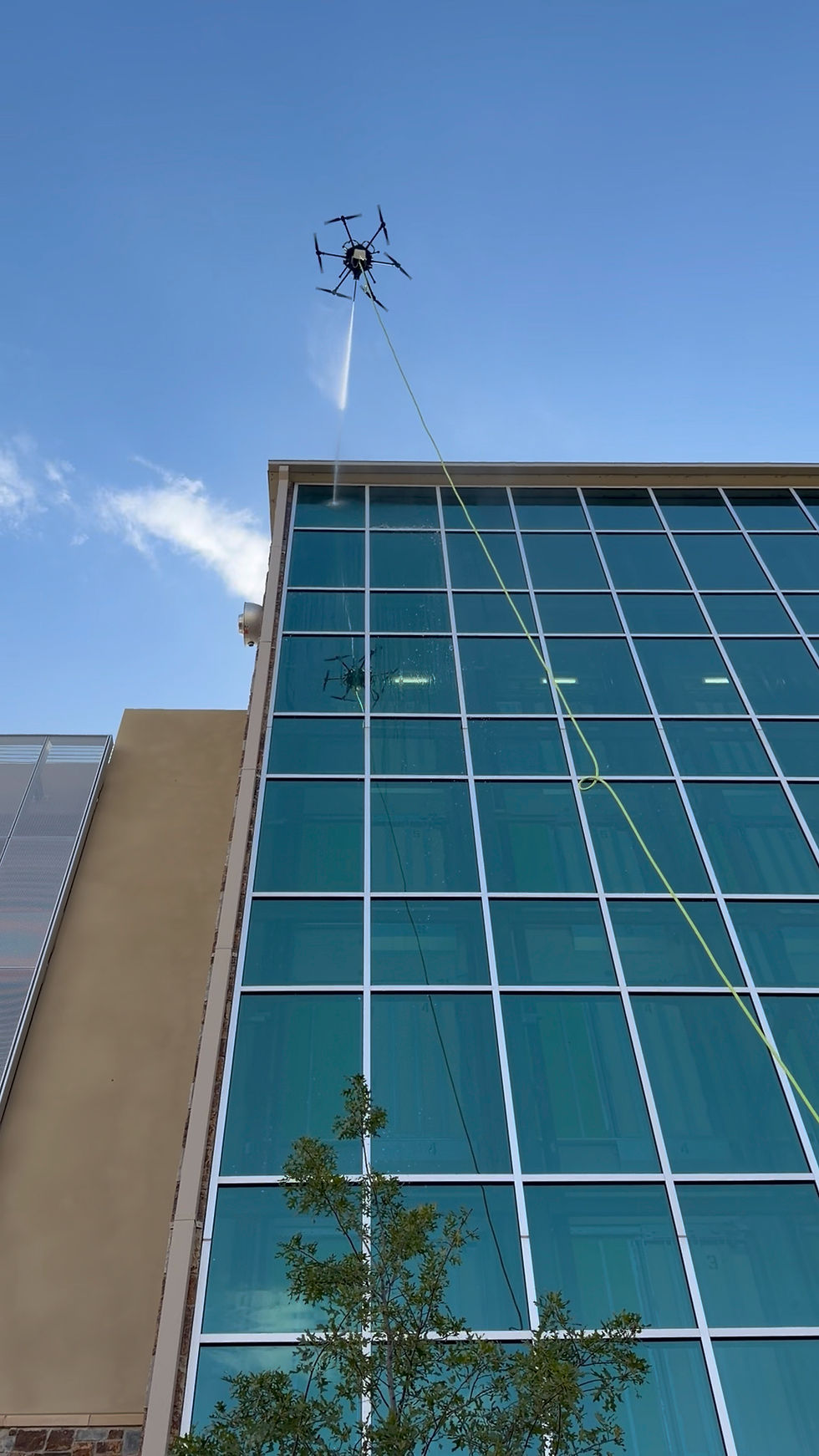
At Ascent Surface Care, we've modernized how these services are delivered. By leveraging an advanced fleet of heavy-lift commercial drones, we deploy precise, targeted soft washing solutions to complex building geometries—ranging from two to fifteen stories—without the need for heavy boom lifts or scaffolding .
Our FAA-certified pilots and OSHA-trained crews execute these cleaning profiles safely and efficiently, eliminating the high-risk liabilities and tenant disruptions associated with traditional methods. From specialized nozzle payloads to comprehensive wastewater reclamation that keeps your property EPA-compliant, drone-assisted soft washing represents the future of facility maintenance.
Whether your facility requires a delicate soft wash to restore its facade or industrial flatwork pressure washing to revitalize your parking structures, making the right technical choice protects your investment for years to come. Check out our soft wash and power washing services page for more information on these services.


Comments